
About the service
THE UNITAT DE TÈCNIQUES AUGMENTATIVES DE COMUNICACIÓ I HABILITACIÓ (UTAC) serves any user of augmentative communication, the professionals who support them, and their families. People may use augmentative communication as a result of a motor disability, autism spectrum disorder, intellectual disability, or any other cause that makes it difficult or impossible to use speech to communicate, develop language and/or access learning.
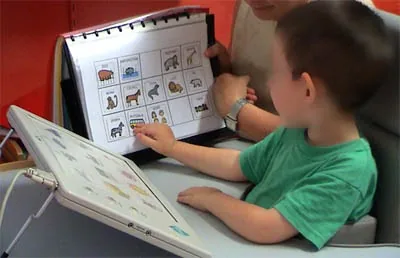
UTAC operates as an External Service of the Facultat de Psicologia, through collaboration agreements between the Generalitat de Catalunya (Departament d'Educació and Departament de Drets Socials) and the Fundació Bosch i Gimpera of the Universitat de Barcelona. UTAC's users are children, young people, adults and older people with cerebral palsy, injuries caused by accidents, progressive neurological or muscular diseases, autism spectrum disorders, intellectual disability, aphasia, hospitalisation or other conditions that make oral language, handwriting, mobility or environmental control difficult or impossible. Augmentative communication systems are forms of expression that serve as alternatives to speech for people who have not acquired it or who have lost it for various reasons. They include technological resources, such as electronic communication devices with voice output and personal computers, adapted so that even people without functional use of their hands can use them. They also include other forms of communication based on gestures and manual signs, or on low-tech assistive products such as communication boards. Computer access systems include all kinds of peripherals, special software and keyboard and mouse emulation systems for alternative access to standard software. They allow people with motor disabilities, even in very severe cases, to use a computer so that they can write, draw, play, study or work. They also give access to information networks for searching and remote communication.
Adapted play and environmental control systems enable people with reduced mobility and manual dexterity to take part in leisure and household activities, such as activating toys, controlling alarms and household elements like the bed, windows and doors, operating the television and other appliances, etc.
Outreach, training and research are activities that UTAC carries out, in collaboration with other universities and national and international organisations, to provide tools for professionals, families and users themselves, and to help raise public awareness. They include producing texts and videos, organising courses and lectures, taking part in conferences, applied research, and developing software and assistive products.